
Views: 222 Author: Rebecca Publish Time: 2025-10-29 Origin: Site


Content Menu
● What Exactly Is a 100 Ton Punch Press?
● Advantages of Using a 100 Ton Punch Press
>> Cost Savings
>> Versatility
>> Improved Safety and Ergonomics
● How the Pressing Force Works
● Typical Industrial Applications
>> Automotive
>> Aerospace
>> Construction
● Types of 100 Ton Punch Presses
● Factors to Consider Before Purchasing
● Increasing Production Efficiency
>> Daily Checks
>> Weekly Tasks
● Sustainability and Energy Efficiency
● Common Challenges and Solutions
>> Challenge 2: Inconsistent Punch Depth
>> Challenge 3: Machine Overheating
>> Challenge 4: Sheet Deformation
● Safety Regulation and Operator Training
● Technological Evolution in 100 Ton Punch Presses
● The Growing Role of Chinese Manufacturers
● FAQ
>> 1. What materials can a 100 ton punch press handle?
>> 2. How long can a 100 ton punch press operate without major maintenance?
>> 3. Can it be integrated with automated feeding systems?
>> 4. What kind of foundation is required for installation?
>> 5. How does servo technology improve performance?
In metalworking industries, efficiency drives competitiveness. Whether producing automotive panels, appliance frames, or aerospace components, businesses depend heavily on stable, high-performing equipment. Among them, the 100 ton punch press remains the go-to choice for a variety of forming and stamping operations.
A punch press applies a controlled force using a ram and die to cut, shape, or emboss metal sheets into desired forms. With 100 tons of pressing capacity, this machine guarantees strength and precision — making it a cornerstone for manufacturers who aim for consistent output.
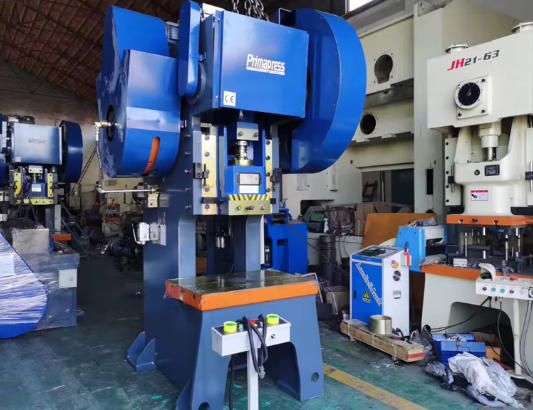
A 100 ton punch press can be mechanical, hydraulic, pneumatic, or servo-driven. Its tonnage refers to the maximum pressure it exerts during a stroke. The machine converts mechanical or hydraulic energy into punching force, allowing it to deform metal without thermal impact.
- Frame: The structural support ensuring rigidity.
- Ram: The vertically moving part that delivers downward force.
- Bolster Plate: The stationary platform that holds the die.
- Crankshaft or Cylinder: Responsible for motion and energy transfer.
- Clutch and Brake: Regulate motion and synchronize cycles.
- Die Set: The shaping tool that defines workpiece geometry.
- Controller: Manages automation, stroke control, and safety monitoring.
Advanced models include a digital control system that monitors position, speed, oil temperature, and tonnage in real time, ensuring every punch is stable and accurate.
The 100 ton punch press represents the balance between power and precision. Its performance advantages make it ideal for mass production as well as short-run customized manufacturing.
With 100 tons of force, the machine can complete each stroke faster, reducing cycle time and enabling continuous high-volume operations.
CNC or PLC control systems allow extreme precision with minimal deviation, ensuring uniform product quality.
Automated feeding and die-changing systems reduce labor requirements while maintaining round-the-clock operation, minimizing downtime.
From perforating sheets to deep drawing components, it can process different metal types, including steel, iron, copper, and lightweight alloys.
Modern designs integrate safety light curtains, overload protection, and automatic shut-offs, ensuring the operator's security and comfort.
The concept of tonnage is essential for choosing and operating a punch press. The 100 ton force is the maximum load at which the material can be cut or formed without failure or tool damage. Tonnage calculation depends on:
- Material type and yield strength
- Thickness of the sheet
- Perimeter of the cut
- Shear strength of the metal
For example, punching a 3 mm thick mild steel sheet with a cut perimeter of 200 mm requires approximately 90 to 100 tons of force. Understanding this helps operators choose die sets and settings precisely for maximum performance.
A 100 ton punch press plays a vital role in heavy and medium-duty metal fabrication.
Used for stamping chassis reinforcements, mounting brackets, transmission plates, and pedal assemblies.
Ideal for forming lightweight alloy parts requiring tight tolerances and repeatability.
Processes building plates, connection joints, and structural reinforcements used in bridge construction or industrial frameworks.
Produces front covers, inner panels, and frames for washing machines, compressors, and ovens.
Creates precise ventilation holes and patterns in control boxes, switch panels, and cabinets.
Punches thick steel plates for machine housings, plows, and brackets.
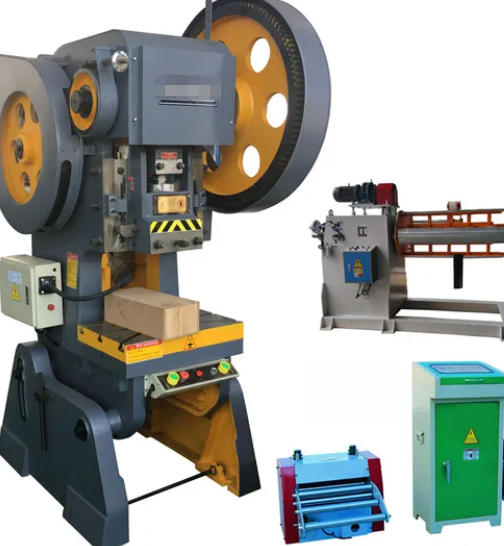
Uses a flywheel and crankshaft to generate force. It operates rapidly, ideal for repetitive tasks such as stamping and blanking.
Uses hydraulic pistons to apply pressure. It offers flexibility, better force control, and smoother operations for complex shaping.
Uses compressed air for lighter stamping and assembly operations. It has a simple structure and quick cycling.
Combines controlled electric motors with precision feedback for digital, energy-efficient punching with clean, quiet operation.
Each type suits different materials and production styles, allowing manufacturers to tailor their investment for specific workflows.
Selecting the right machine directly affects performance.
- Material Strength and Thickness: Heavy gauge steel requires higher pressure.
- Stroke Speed: Determines how many parts you can produce per minute.
- Worktable Size: Must be large enough for your part dimensions.
- Automation Integration: Machines supporting robotic feeders enhance long-term ROI.
- Maintenance Requirements: Ease of oil changes, seal replacements, and access panels.
- Safety Regulations: Compliance with CE, ISO, or OSHA standards ensures international quality.
When properly chosen, the 100 ton punch press can easily pay off its purchase cost through stable output and lower scrap rates.
Upgrading to a 100 ton punch press can dramatically increase line efficiency, especially when combined with automation.
- Coil feeders for continuous sheet input
- Robotic arms for loading and unloading
- Die storage systems for quick tool changeovers
- Automated lubrication and scrap ejection mechanisms
These improvements reduce manual handling, improve consistency, and shorten setup time between production runs.
To fully unlock the lifetime value of your 100 ton punch press, preventive maintenance is essential.
- Inspect oil levels and hydraulic pressure.
- Clean working surfaces to prevent corrosion.
- Check for leaks, cracks, or abnormal vibration.
- Calibrate the control panel sensors.
- Test safety switches.
- Verify die alignment and slide parallelism.
- Replace hydraulic filters.
- Check ram gibs for wear.
- Inspect clutch and brake assembly.
- Conduct structural inspection annually.
- Ensure lubrication systems remain functional.
- Store dies in clean, humidity-free conditions.
Following these practices ensures greater uptime, reliability, and lower maintenance costs in the long term.
A modern 100 ton punch press reduces environmental impact through better energy management technologies. Servo-driven models use motors that only consume energy during pressing, cutting power use by up to 30%. Hydraulic systems now feature intelligent oil recovery and thermal control for lower waste.
Recycling scrap metal generated from punching and adopting eco-friendly lubricants also contribute to greener, more responsible production.
Excessive friction can damage dies prematurely.
Solution: Apply correct lubrication and schedule regular die regrinding.
Usually caused by uneven material thickness or misalignment.
Solution: Fine-tune stroke length and use precision leveling feeders.
May occur in continuous heavy-load operations.
Solution: Ensure adequate cooling and check oil circulation regularly.
Occurs if pressure is applied unevenly.
Solution: Verify die balance and maintain consistent pressure control.
Operator safety is a key part of any punch press operation. Proper training and following operational protocols can prevent serious accidents.
- Conduct safety drills regularly.
- Ensure two-hand control systems operate correctly.
- Keep uncluttered workspace around machine.
- Use soundproof enclosures to reduce noise exposure.
- Provide protective equipment such as gloves and visors.
- Implement lockout/tagout during servicing.
Factories combining automation with these practices achieve safer, faster, and more productive operations.
The latest generation of presses merges digital controls and precision engineering. Integration with Industry 4.0 systems allows real-time performance monitoring through sensors and cloud software. Predictive maintenance algorithms can forecast bearing wear or hydraulic issues before downtime occurs.
Digital twin simulations enable manufacturers to test die shapes, reduce setup time, and visualize energy consumption. Combined, these innovations make the traditional press a smarter, more sustainable production tool.
China has emerged as a global leader in punch press innovation. Manufacturers provide high-quality machines with customizable features, modular automation, and cost-effective pricing. These presses meet international standards and can be equipped with servo systems, advanced controllers, and quick-change die frames.
Chinese OEM suppliers often provide full after-sales service, helping overseas clients integrate machines into automated lines with minimal adaptation. Their commitment to R&D and large-scale production makes them a strong partner for global metal fabrication businesses.
A 100 ton punch press is more than machinery; it is the backbone of efficient, scalable production. Its capability to combine precision, speed, and reliability allows factories to meet growing global demands. With the integration of automation, careful maintenance, and technological upgrades, the machine's full potential can be unlocked to achieve superior performance and profitability.
Whether in automotive component production, aerospace fabrication, or industrial assembly lines, investing in a well-engineered 100 ton punch press ensures every punch delivers value. When sourced from a trusted manufacturer with a focus on customization and energy efficiency, it remains a cornerstone of modern metalworking success.
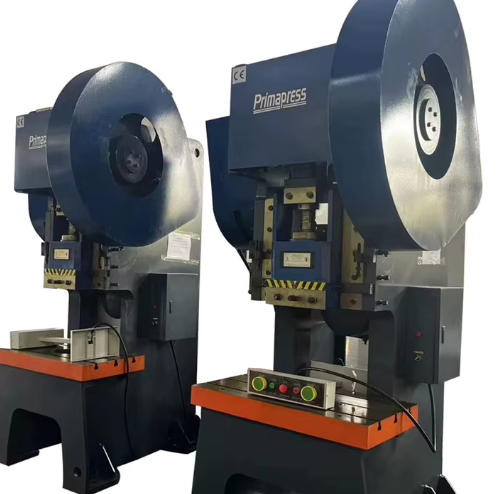
It can handle metals like mild steel, stainless steel, copper, aluminum, and brass. The permissible thickness depends on die design and material yield strength.
With regular inspection and oil replacement, it can operate continuously for over 10,000 hours before requiring major service.
Yes. Many press models support servo feeders, robotic arms, coil handling, and stacking systems to create a fully automated production line.
A stable concrete base with vibration damping and accurate leveling ensures precision alignment and reduces mechanical strain during operation.
Servo systems enable controlled punching speed, adjustable pressure, and programmable stroke lengths, delivering higher precision and energy savings over conventional designs.


