
Views: 222 Author: Rebecca Publish Time: 2025-10-21 Origin: Site


Content Menu
● Understanding the Function of a 40 Ton Punch Press
● Main Components of a 40 Ton Punch Press
● Key Advantages of Using a 40 Ton Punch Press
>> 1. Superior Power and Precision
>> 3. Cost Reduction and Time Savings
>> 4. Adaptability to Different Operations
● Comparison: Mechanical vs. Hydraulic 40 Ton Punch Press
● Selecting the Right 40 Ton Punch Press
● Safety Rules and Setup Guidelines
● Maintenance and Troubleshooting
● Productivity Optimization Tips
● Future Trends in Punch Press Technology
● Cost, ROI, and Long-Term Value
● Environmental and Energy Considerations
● FAQs
>> 1. What materials can a 40 Ton Punch Press handle?
>> 2. What is the maximum sheet thickness it can handle?
>> 3. Are modern punch presses energy-efficient?
>> 4. How often should dies be serviced or replaced?
>> 5. Can the 40 Ton Punch Press integrate with CNC or automation lines?
A 40 Ton Punch Press is one of the most indispensable pieces of equipment for any professional workshop or manufacturing line. It offers remarkable strength, precision, and versatility, capable of punching, bending, and forming metal with unparalleled accuracy. Whether your goal is to produce automotive components, electrical enclosures, or metal fittings, a 40 Ton Punch Press gives you the performance and reliability needed to stay competitive in modern metal fabrication.
This guide will take a comprehensive look at the 40 Ton Punch Press—its working principle, main components, practical benefits, selection criteria, maintenance practices, and industry applications. By the end, you will understand why this machine remains a cornerstone of efficient and flexible production operations around the world.

At its core, a punch press uses compressive force to shape or cut material by pressing a punch (the male tool) into a die (the female counterpart). When 40 tons of pressure are applied, the material between the two shapes is sheared or deformed into the desired form.
The mechanical or hydraulic drive system converts electrical energy into mechanical pressure. The punch tool descends at controlled speed and force, generating clean, precise shapes in milliseconds. The process is adjustable through stroke control, pressure settings, and die configuration, ensuring excellent repeatability for both small and large production batches.
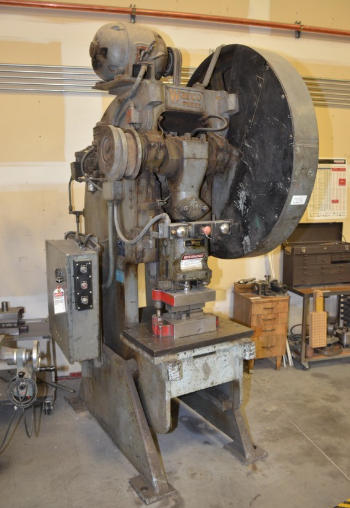
A modern press is designed not only for power but also for durability, precision, and user convenience. The main elements include:
- Frame: The heavy-duty body made from cast steel or iron, providing rigidity and long-term stability under load.
- Ram or Slide: Moves up and down to deliver force through the punch.
- Bolster Plate: Holds the lower die, ensuring proper alignment with the upper punch.
- Drive Mechanism: Converts motor energy into motion using flywheels (mechanical) or hydraulic pistons (hydraulic).
- Control Panel: Offers parameter control such as stroke length, pressure, and operating speed.
- Safety Devices: Include interlocks, light curtains, and overload protection systems.
These components work together harmoniously, allowing the press to operate at a consistent level of accuracy and performance over years of service.
With 40 tons of pressure at your command, you can manage a wide array of materials, from thin aluminum to thick stainless steel, while achieving tolerances within microns.
Its fast cycle times and automated feed systems allow high production output, significantly reducing manual labor and bottlenecks in fabrication.
By performing multiple tasks in one station—cutting, punching, shaping—you streamline production, lowering costs per unit and minimizing waste.
Compatible with numerous die sets, the same machine can easily switch between operations such as hole punching, embossing, and notching.
Robust design and quality components ensure the machine withstands years of continuous use with minimal degradation in accuracy or power.
A 40 Ton Punch Press fits seamlessly into numerous manufacturing environments:
- Automotive Sector: Used for creating brackets, chassis parts, and reinforcement panels.
- Aerospace Manufacturing: Delivers precision cutting and forming of aluminum and titanium sheets.
- Electrical Equipment Production: Makes housings, switchgear components, and control panels.
- Construction Industry: Fabricates support plates, wall fixtures, and architectural fittings.
- Appliance Manufacturing: Punches and bends sheet metal bodies for washing machines, ovens, and air conditioners.
- Furniture Production: Creates corner joins, mounting plates, and decorative perforations for metal furniture.
This versatility has made the 40 Ton Punch Press a preferred choice for workshops requiring high performance across diverse production needs.
| Feature | Mechanical Press | Hydraulic Press |
|---|---|---|
| Force Generation | Flywheel and clutch | Hydraulic cylinder |
| Speed | Very high, up to 150 strokes/min | Adjustable, lower speed |
| Pressure Curve | Highest near bottom of stroke | Constant through full stroke |
| Control | Less flexible | Highly adjustable |
| Maintenance | Simpler | Requires periodic fluid care |
| Ideal For | High-speed stamping | Deep forming and precision punching |
If your production involves complex forming or variable material thickness, a hydraulic punch press is ideal. For consistent, mass production of smaller parts, the mechanical press offers unmatched speed and cycle efficiency.
Selecting the best model for your workshop depends on your operational goals and production demands. Consider these aspects carefully:
- Die Compatibility: Ensure your existing dies fit or can be easily adapted.
- Automation Options: Look for feeders, conveyors, or robotic integration for continuous operation.
- Control System Type: Digital, PLC, or CNC control offers superior precision and repeat repeatability.
- Build Quality: Heavy steel frames ensure ideal rigidity for high tonnage applications.
- Energy Efficiency: Newer models integrate servo motors or intelligent hydraulic systems to reduce power usage.
- Vendor Support: Choose suppliers offering technical training and accessible service parts.
Taking the time to evaluate these parameters ensures long-term ROI and minimal operational interruptions.
Operating a 40 Ton Punch Press involves certain safety and setup best practices:
- Secure Installation: Mount the press on a stable, reinforced concrete base.
- Proper Guarding: Always use safety shields or electronic light guards.
- Operator Positioning: Maintain a safe distance from moving components.
- Dual-Hand Operation: Prevents accidental triggering of the ram.
- Periodic Inspections: Check the clutch, brake, and alignment regularly.
- Emergency Stop Readiness: Always test the stop system at the start of every shift.
A safe working environment protects operators and ensures uninterrupted productivity.
Regular maintenance extends the lifespan of a 40 Ton Punch Press dramatically.
Here's how to keep it in top condition:
- Lubricate Bearings and Joints: Poor lubrication accelerates wear.
- Monitor Hydraulic Fluid Quality: Replace oil if discolored or contaminated.
- Check Ram Alignment: Misalignment can cause uneven punching and die damage.
- Inspect Electrical Components: Faulty wiring or sensors can trigger malfunctions.
- Keep Dies Clean: Dirt or debris can cause surface defects on parts.
If performance drops, first check for low fluid pressure (in hydraulic models) or worn clutch linings (in mechanical presses). Addressing minor issues early prevents costly shutdowns.
To maximize production efficiency with your 40 Ton Punch Press:
- Plan tool changes strategically to minimize downtime between batches.
- Implement automation such as automatic material feeders.
- Use digital monitoring systems to track cycle counts and tonnage.
- Combine processes—like hole punching and bending—into one sequence when possible.
- Schedule preventive maintenance instead of waiting for failure symptoms.
By adopting these steps, many workshops report up to 30% improvements in throughput within months of operation.
Technological innovation continues to enhance punching efficiency and sustainability. The latest advancements include:
- Servo-Driven Systems: Deliver faster acceleration and better energy savings.
- Smart Monitoring Sensors: Detect anomalies in vibration, temperature, or tonnage in real time.
- Hybrid Mechanical-Hydraulic Systems: Combine the speed of mechanical drives with the precise control of hydraulics.
- AI-Powered Setup Assistants: Optimize stroke settings and die configurations automatically.
- Green Design Initiatives: New models reduce noise, vibration, and energy consumption.
Embracing these modern technologies can future-proof your workshop and improve competitiveness in rapidly evolving manufacturing industries.
While a 40 Ton Punch Press can range between $8,000 and $30,000, depending on its configuration and automation level, it remains one of the most economically rewarding investments.
The machine pays for itself by:
- Eliminating outsourcing costs associated with third-party metal forming.
- Reducing waste through clean precision cuts.
- Shortening lead times for customer orders.
- Boosting production consistency, leading to improved brand reliability.
Depending on workload, users generally achieve ROI within 12 to 18 months, especially when operating in high-volume fabrication environments.
A Chinese electronics manufacturer replaced three older 25-ton presses with two CNC-controlled 40 Ton Punch Presses. The outcome was a 45% productivity boost and a 20% reduction in material scrap.
In another case, a small U.S. fabrication shop introduced a servo-hydraulic 40 Ton model for custom aluminum fixtures, slashing production time per part from 90 seconds to 55 seconds.
Such improvements illustrate the transformative impact of upgrading from conventional machinery to a modern 40 Ton Punch Press.
The adoption of energy-efficient models also contributes to sustainability goals. Machines equipped with variable-frequency drives (VFDs) or servo motors adjust energy use based on load requirements, significantly reducing electricity consumption. Hydraulic press systems now feature oil filtration units to extend fluid life and minimize waste disposal.
In addition, noise-reduction features protect worker health, while vibration control improves accuracy and extends die life. Choosing environmentally sustainable equipment strengthens your company's compliance with modern ESG standards.
A 40 Ton Punch Press is not just a machine—it is a cornerstone of innovation and efficiency in modern metal fabrication. With immense power, flexibility, and precision, it enables workshops to produce complex components at a fraction of traditional costs. Whether you manufacture automotive brackets, electrical housings, or aerospace components, the 40 Ton Punch Press delivers the power and reliability needed for today's demanding production environments.
When chosen wisely, properly maintained, and equipped with the right dies, it will serve as a vital, profit-driving asset in your workshop for years to come.
It effectively processes metals such as mild steel, aluminum, stainless steel, copper, and even some industrial plastics when equipped with appropriate dies.
Typically up to 6–8 mm depending on the material's tensile strength and the die design.
Yes. Many new models feature servo or variable-frequency drive systems that reduce power usage by up to 25%.
Inspection is recommended every 5000 strokes. Replacement depends on wear, but high-quality dies last several hundred thousand cycles with proper care.
Absolutely. Most modern presses can be linked with CNC feeders, conveyors, and robotic systems for fully automated production.


