
Views: 222 Author: Rebecca Publish Time: 2025-11-14 Origin: Site


Content Menu
● Fundamentals of Punch Press Machines
>> Limitations
● Automatic Punch Press Machines
● Industry Applications of Punch Press Machines
● Technology Innovations in Punch Press Automation
● Punch Press Selection Criteria
● Comparing Manual and Automatic Punch Press Machines
● Maintenance and Safety Considerations
● FAQ
>> 1. What maintenance does a manual punch press require?
>> 2. Can automatic punch press machines be reprogrammed easily for different jobs?
>> 3. Which is safer: manual or automatic punch press?
>> 4. Are manual punch press machines suitable for thick or hard metals?
>> 5. How is productivity measured between manual and automatic presses?
Punch press machines are a backbone of modern manufacturing, transforming raw metal sheets into the essential components found in vehicles, appliances, electronics, and thousands of industrial products. There are two primary types: manual and automatic. Each brings distinct strengths to production environments and is tailored to different scales and complexities of work. Understanding these machines' differences is crucial for manufacturers, engineers, and business owners seeking efficient, cost-effective solutions tailored to their specific needs.

A punch press is a machine tool designed for shaping or cutting metal by applying mechanical force to a punch and die. This force can be generated manually or automatically, shaping the material into complex designs, piercing holes, forming edges, and creating custom patterns and components.
- Ram: Delivers force to the punch.
- Punch: The cutting or shaping tool.
- Die: A matching component that receives the punch and shapes the material.
- Drive Mechanism: Provides manual or automatic power.
- Control Interface: Manages the stroke, pressure, and sequence.
Punch presses vary from simple, hand-operated machines to sophisticated, fully automated CNC systems capable of creating highly complex and precise parts.
Manual punch presses operate through direct human input. The user places the material, aligns the punch and die, then actuates the press via a hand lever, flywheel, or foot pedal. The mechanical force—while moderate—is sufficient for many tasks like blanking, bending, edging, and simple forming.
- Low Acquisition Cost: Manual presses are budget-friendly, making them perfect for small shops and startups.
- Flexible Job Scope: Operators can switch between tasks quickly with minimal setup.
- Ease of Maintenance: Fewer moving and electronic parts mean reduced need for specialized service.
- High Operator Control: Craft-focused manufacturing benefits from the hands-on nature of manual presses.
- Throughput: Manual presses are limited by operator speed and stamina.
- Power Constraints: Human-driven force restricts use to thinner or softer materials.
- Fatigue and Labor Costs: Large batch runs can increase operator fatigue, reduce accuracy, and elevate cost per part.
Manual presses are widely used in job shops, repair facilities, prototype development, and by artisans for short production runs or custom pieces. They are also popular in educational settings and maintenance departments where versatility and simplicity are valued.
Automatic punch press machines utilize electrical, hydraulic, or pneumatic drives, often controlled by programmable logic controllers (PLC) or CNC systems. These machines automate the positioning, punching, and ejection of parts, operating at much higher speeds and with greater repeatability than manual presses.
- High-Speed Operation: Automatic presses routinely deliver hundreds of strokes per minute, enabling mass production.
- Repeatable Precision: CNC and PLC controls ensure every part meets exact specifications, crucial for industries where fit and function are critical.
- Minimal Labor Input: Operators are required only for setup, monitoring, and changeovers; production is largely hands-free.
- Advanced Safety: Features include guarding, interlocks, emergency stops, and sensor systems to protect operators and material.
- Customizability: Automatic presses can be configured for complex shapes, multi-stage forming, or in-line quality checks.
- High Initial Investment: Equipment, installation, and integration costs are considerable.
- Space Requirements: Automatic presses typically require dedicated infrastructure and more floor space.
- Complexity: Requires skilled technicians for programming, troubleshooting, and maintenance.
- Less Flexible for One-Off Jobs: Ideal for uniform, high-volume production but slower to adapt to small, customized runs.
Automatic punch presses dominate high-volume sectors where uniformity and pace are essential—automotive, aerospace, electronics, appliance manufacturing, and large-scale metalworking.
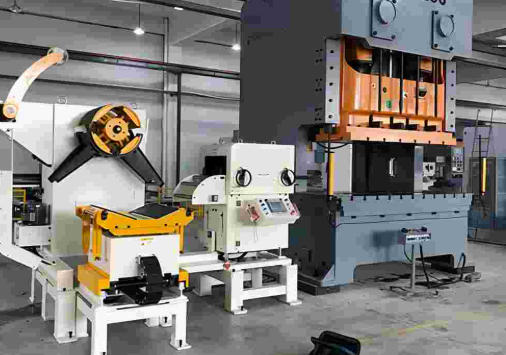
Punch presses, both manual and automatic, serve a wide array of manufacturing sectors. Their versatility, speed, and adaptability make them indispensable.
Punch presses create car body panels, hood brackets, chassis supports, and even precision engine components. Automatic presses enable mass production, driving consistency and speed for millions of vehicles yearly. Manual presses are used for prototyping and custom aftermarket accessories.
Aircraft require parts with strict tolerances and lightweight properties. Automatic punch presses process advanced alloys like titanium and aluminum, forming intricate panels, support structures, and specialized fixtures for engines and interiors. Custom dies allow for unique geometries and rapid innovation.
Punch presses stamp connectors, circuit board mounts, light casings, and shielding covers. High-precision requirements demand repeatable accuracy, achieved effortlessly by CNC-controlled automatic presses. Manual presses are ideal for prototype runs and small-batch component creation.
Precision and consistency are paramount for surgical instruments, diagnostic housings, and implantable components. Punch presses work with stainless steel, titanium, and other medical-grade materials, ensuring parts are clean, reliable, and compliant with strict performance and hygiene standards.
Punch presses produce framing members, fasteners, cable trays, and custom brackets for infrastructure and commercial buildings. Durability and efficiency are critical, with automatic presses churning out thousands of identical parts for large projects. Manual presses fill the gap for repair jobs and bespoke architectural details.
From appliances and garden tools to sports equipment and kitchenware, punch presses are used for panels, front plates, knobs, and structural elements. Their ability to combine form, function, and durability at scale helps brands deliver quality goods efficiently.
Networking equipment, antennas, and mobile device frames all rely on precision stamped metal components. Punch presses provide quick turnaround and cost-saving bulk production, advancing global connectivity.
Components for wind turbines, solar panel mounting systems, and energy storage units require high precision and durability. Punch presses—especially automatic types—offer tailored production for evolving sustainability needs.
Durable, corrosion-resistant parts for tractors, planters, and irrigation systems are formed using punch presses. These machines enable large-scale production at competitive costs, supporting food security and agricultural technology.
Machines form brackets, hinges, decorative trims, and casings for furniture. In packaging, punch presses fabricate machinery parts and containers that support efficient processing and sustainability goals.
Automation has transformed the capabilities of punch presses:
- Servo-Driven Systems: Modern presses use servo motors for variable speed, precise positioning, and energy efficiency.
- Coil Feeding & Robotic Unloading: Integration with feeders and robots allows seamless, high-speed operation.
- Smart Monitoring: Sensors and real-time data analytics enable predictive maintenance and quality assurance.
- Modular Tooling: Quick-change dies reduce downtime and support flexible production schedules.
Industry 4.0 principles are increasingly incorporated, connecting machines to central management systems, allowing remote diagnostics and optimizing workflow.
To choose the ideal punch press machine, manufacturers must assess:
- Required production speed and batch size
- Material types and thicknesses
- Complexity of part geometry
- Budget constraints
- Available floor space and infrastructure
- Operator expertise and training needs
Manual presses excel where flexibility, low cost, and craftsmanship matter. Automatic presses dominate high-volume or precision-critical sectors.
| Feature | Manual Punch Press | Automatic Punch Press |
|---|---|---|
| Operation | Hand lever/crank driven | Electrically, hydraulically, or pneumatically driven |
| Speed | Slow, operator dependent | Fast, programmable and consistent |
| Labor Required | High, continuous engagement | Low, mainly setup and monitoring |
| Cost | Lower initial investment | Higher capex required |
| Maintenance | Simple, low upkeep | More complex, may need specialist support |
| Versatility | High for custom/small batch | High for set routines, less for custom/small batch |
| Application Scale | Small/medium shops, prototyping | Large-scale industries, mass production |
| Safety | Operator-skill dependent | Advanced safety systems built-in |
| Precision/Repeatability | Varies with operator skill | Extremely high; CNC controller possible |
| Size | Compact, movable | Large, fixed installations |
Manual machines feature straightforward maintenance—routine lubrication, periodic inspection, and cleaning. Automatic presses require specialized care, regular calibration, and sometimes software updates. Both machines must adhere to safety protocols, with automatic presses offering advanced protective systems, while manual presses depend primarily on operator vigilance.
Modern punch presses are increasingly designed with sustainability in mind. Automatic models minimize energy waste, optimize material utilization, and are integrated with recyclable feedstock systems. Efficient processes not only reduce costs but also support global efforts toward greener manufacturing.
The role of punch presses continues to evolve with advances in automation, digital integration, and sustainable engineering. The growing need for customized components and the expansion of industries such as renewable energy and advanced electronics ensures that both manual and automatic punch presses will remain vital to manufacturing for years to come.
Manual and automatic punch press machines fill distinct niches in the industrial landscape. Manual presses provide unparalleled flexibility and cost-effectiveness for small jobs and prototyping, while automatic presses guarantee productivity, consistency, and scalability for large-scale production. Choosing between them requires a detailed assessment of production needs, budget, complexity, and required precision. As technology advances, both machine types adapt, becoming more efficient, safer, and integrated into the digital factory environment. Investing in the right punch press unlocks quality, efficiency, and competitive advantage in manufacturing.
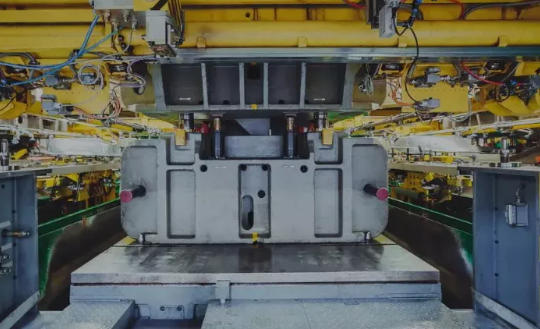
Manual punch presses entail basic mechanical maintenance: regular lubrication, tightening of bolts, and inspection of punch and die for signs of wear. Their simplicity enables most users to perform upkeep without extensive technical support.
Automatic punch presses equipped with CNC or PLC controls can be swiftly reprogrammed for various patterns, shapes, and materials. This flexibility is crucial in high-volume environments with evolving production demands.
Automatic presses generally offer superior safety features: electronic guards, sensors, automated shutoffs, and emergency stop functions. Manual presses rely on operator attention and skill for accident prevention, making consistent training essential.
Manual punch presses work best on thin or soft metals, as human-applied force is limited. Automated hydraulic or mechanical presses are recommended for thicker or harder materials requiring greater power.
Productivity is assessed by strokes per minute or parts per hour. Automatic presses can produce hundreds or thousands of parts per shift, vastly surpassing manual presses' output, which is limited by operator speed and endurance.


