
Views: 222 Author: Rebecca Publish Time: 2025-10-28 Origin: Site


Content Menu
● Understanding the Basics: What is a Punch Press?
>> Core Components and Their Roles
● What Tonnage Really Means in Punch Press Operation
● 100 Ton Punch Press Overview
>> Key Features
>> Advantages
>> Limitations
● 200 Ton Punch Press Overview
>> Key Features
>> Advantages
>> Limitations
● Comparative Analysis: 100 Ton vs. 200 Ton Punch Press
● Choosing the Right Machine: Key Decision Factors
>> Material and Depth of Forming
>> Workshop Space and Infrastructure
>> Budget and Return on Investment
● Design and Automation Considerations
● Maintenance and Safety Protocols
>> Preventive Maintenance Steps
● Cost Factors Affecting Each Model
>> Case 1: Precision Electronics Workshop
>> Case 2: Heavy Equipment Fabricator
● Energy Efficiency and Sustainability
● Emerging Trends in Punch Press Technology
● FAQ
>> 1. What materials can be punched on a 100 ton press?
>> 2. Is the 200 ton punch press suitable for stainless steel?
>> 3. How can I reduce energy consumption on a 200 ton press?
>> 4. Can a 100 ton press be automated?
>> 5. What is the average lifespan of a punch press?
In the realm of metal fabrication and industrial forming, selecting the ideal punch press capacity is one of the most significant decisions for production planning. A punch press's tonnage influences not only the type of materials it can handle but also its operating cost, product accuracy, tooling lifespan, and safety performance. Choosing between a 100 ton punch press and a 200 ton punch press can determine how well your business scales in the long term.
This comprehensive guide compares both machines in depth, outlining their features, advantages, applications, and cost considerations to help you make a well-informed decision for your workshop or factory.
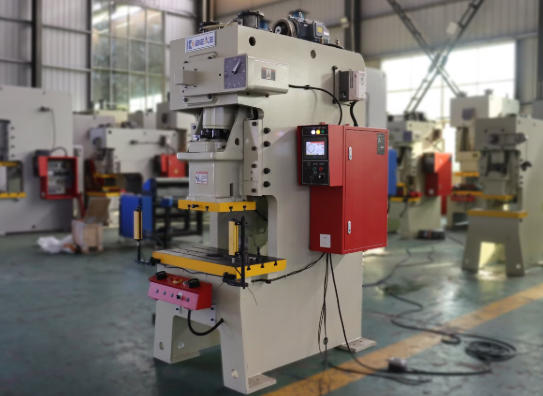
A punch press is a mechanical or hydraulic machine that uses compressive force to cut or form sheet metal into specific shapes. It operates by forcing a punch into a die set under high pressure, producing holes, bends, or deformations.
- Frame: The structure holding all components and absorbing punching stress.
- Ram/Slide: The moving part that drives the punch downward into the die.
- Clutch and Brake System: Controls engagement and disengagement of power transmission.
- Bolster Plate: Supports the die and maintains precise alignment.
- Control Interface: Includes manual, CNC, or servo control panels for operational accuracy.
Punch presses are widely used across industries:
- Automotive and truck parts manufacturing
- Electronics housings and switch panels
- Air-conditioning and appliance equipment
- Structural and framing components
- Precision sheet metal fabrication
Tonnage refers to the maximum force a punch press can exert during the punching or forming operation. Selecting correct tonnage ensures the machine operates within safe load limits, prevents tool breakage, and produces high-quality parts.
If your press is overpowered relative to your production needs, operational costs increase unnecessarily. Conversely, an underpowered press will cause stress damage and deform the workpiece.
The base formula for calculating required tonnage is:
Tonnage=Perimeterofcut×Materialthickness×Shearstrength/1000
This equation translates material resistance into tonnage force, giving manufacturers a clear benchmark for machine selection.
A 100 ton punch press is ideal for light- to medium-duty operations that demand precision but not extreme force. It offers a balance between energy efficiency and multi-purpose performance.
- Pressing Force: 100 tons
- Stroke Length: 80–120 mm
- Operating Speed: 20–70 strokes/minute
- Control Type: Mechanical, pneumatic, or servo-electric
- Maximum Sheet Thickness: Up to 5 mm for mild steel
- Compact design suitable for limited floor space
- Lower initial investment and energy usage
- Versatile setup for small batch production
- Easy installation, maintenance, and operator training
- Inadequate for thick or high-tensile materials
- May struggle with complex forming dies
- Limited adaptability for mass production tasks
Typical users include small fabrication workshops, prototype developers, and medium-scale component manufacturers focusing on aluminum, copper, and light steel applications.
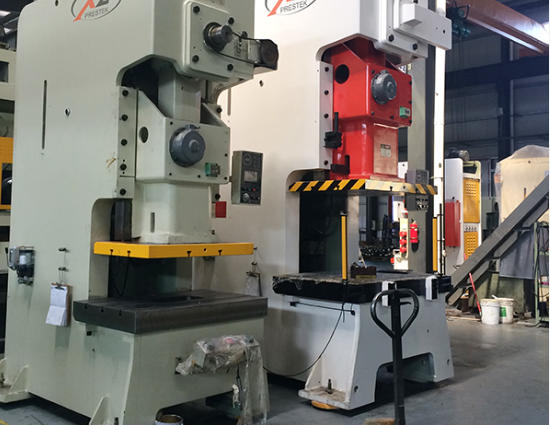
A 200 ton punch press delivers twice the pressing capacity and supports thicker or harder materials. It is often integrated into large-scale industrial production lines requiring continuous, high-load performance.
- Pressing Force: 200 tons
- Stroke Length: 150–250 mm
- Operating Speed: 15–50 strokes/minute
- Machine Type: Hydraulic or servo-mechanical
- Maximum Sheet Thickness: Up to 10 mm or higher
- Handles high-tensile and thick sheet materials
- Suitable for large or complex dies
- Better repeatability under consistent loads
- Supports high-volume mass production
- Requires stronger foundation and larger space
- Higher power consumption
- More advanced maintenance and skilled operators
Industrial users often include automotive body frame manufacturers, large appliance fabricators, and heavy-duty structural part production lines.
| Feature | 100 Ton Punch Press | 200 Ton Punch Press |
|---|---|---|
| Press Force | 100 tons | 200 tons |
| Material Thickness Range | Up to 5 mm | Up to 10 mm |
| Power System | Mechanical/Servo | Hydraulic/Servo |
| Speed | Faster stroke cycle | Slightly slower but more powerful |
| Floor Space | Compact (small shops) | Large (industrial halls) |
| Energy Consumption | Low | High |
| Maintenance Needs | Lower | Higher |
| Application Scale | Small to medium | Medium to large |
| Suitable Materials | Aluminum, brass, mild steel | Alloy steel, stainless steel |
| Tooling Cost | Lower | Higher |
| Purchase Cost | Affordable | Premium investment |
This table highlights that the 100 ton press prioritizes efficiency and affordability, while the 200 ton press emphasizes heavy-duty capabilities and long-term throughput.
Selecting between these two punch presses involves considering material, production volume, tooling, and ROI.
If your materials are relatively thin or require shallow forms, a 100 ton press is optimal. For heavy-gauge steel, reinforced plates, or deep-drawing tasks, a 200 ton model dominates in performance and consistency.
Higher tonnage machines are suited for round-the-clock industrial production, while 100 ton machines focus on flexible low-volume batches where changeovers are frequent.
Machine footprint and power demand are vital. Small workshops might lack three-phase industrial power or space for a 200 ton press. Always evaluate foundation rigidity and wiring requirements before installation.
The initial investment of a 200 ton press can be 1.5–2 times that of a 100 ton press, but the long-term revenue benefits materialize if your operation demands greater tonnage regularly.
Complex or multi-stage dies often need a more stable press frame, favoring the 200 ton category. Simpler forming or punching dies work perfectly with a 100 ton setup.
- Mechanical: Fast action, cost-effective for thin materials.
- Hydraulic: Smooth power, ideal for thick materials.
- Servo-electric: Precision control with energy efficiency.
Both tonnage models can integrate with robotic feeders, NC controllers, and vision systems for alignment. Automation provides:
- Higher precision and reduced operator dependency
- Faster tool changes via automatic die clamping
- Real-time production insights through IoT sensors
Modern presses are also engineered for CNC integration, enabling data tracking for punching times, force curves, and maintenance alerts.
1. Lubricate guideways and moving shafts at the beginning of every shift.
2. Verify punch and die alignment after each tool change.
3. Inspect hydraulic and air pressure systems weekly.
4. Maintain clean filters and replace seals periodically.
5. Calibrate electronic sensors and safety systems monthly.
- Train all personnel on emergency stop systems.
- Implement die guards and safety light curtains.
- Follow rated load capacity—never exceed press tonnage limits.
- Maintain clear zones around moving parts during operation.
Adhering to these routines extends the lifetime of both 100 ton and 200 ton presses while ensuring consistent precision and operator wellbeing.
When comparing cost efficiency, consider total life-cycle expenses beyond purchase price:
- Initial Investment: The 200 ton press is higher due to its reinforced frame, hydraulic system, and motor capacity.
- Operating Costs: Power, oil, and cooling system demands are more significant for higher-tonnage presses.
- Tooling: Larger dies and complex tooling raise long-term investment but enhance production range.
- Productivity Value: If production volumes justify the cost, 200 ton capacity yields a better per-part cost over time.
A medium factory producing aluminum switch boxes upgraded from a 63 ton to a 100 ton punch press. Output increased by 35%, while energy usage rose only 12%. The company maintained speed while expanding die variety for multiple client contracts.
A vehicle component manufacturer switched from two 100 ton presses to one 200 ton unit with automated feeding. The company reported 40% production efficiency improvement and reduced machine downtime by integrating real-time digital monitoring.
These examples show how matching press tonnage to project demands maximizes efficiency and operational longevity.
Modern servo-driven punch presses combine power with sustainability. Compared to traditional mechanical presses, they can reduce energy consumption by 30–50%, depending on cycle frequency and material load.
Additional eco-efficiency measures include:
- Regenerative braking in servo drives
- Use of eco-friendly hydraulic oil
- Reduced noise and vibration emissions
- Smart standby modes to minimize idle power draw
For manufacturers seeking ISO 14001 environmental certification, these press models support compliance through efficient and low-emission operation.
- Smart Monitoring: Sensors and cloud platforms now track tonnage, die wear, and maintenance schedules automatically.
- Hybrid Drive Systems: Combining mechanical speed with hydraulic consistency for heavier jobs.
- Tool Recognition: RFID technology identifies die sets to preload accurate punch parameters.
- AI-based Quality Control: Visual detection ensures zero-defect production with autonomous adjustments.
Both 100 ton and 200 ton presses are evolving alongside these technologies, bridging the gap between precision and productivity in Industry 4.0 environments.
Both 100 ton and 200 ton punch presses deliver outstanding performance, but the right choice depends on your workload, material, and production goal.
If your operations focus on light to moderate materials, the 100 ton model provides cost efficiency, space savings, and ease of control.
For thick metals, industrial-grade production lines, and long operating cycles, the 200 ton punch press offers unmatched stability, durability, and force.
Purchasing the appropriate tonnage ensures optimal productivity, equipment lifespan, and profitability. Assess your workload capacity, expansion projections, and facility setup before making a final decision. If you need professional assistance, our engineering team can evaluate your production requirements and recommend the ideal configuration for your manufacturing success.
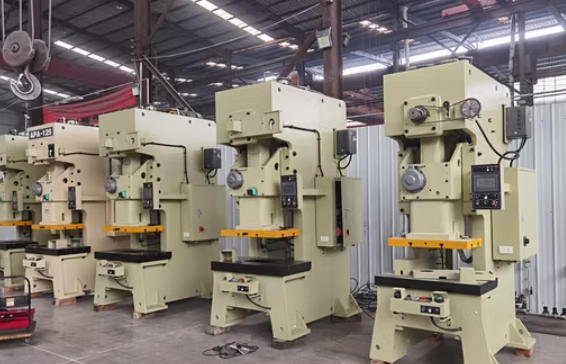
A 100 ton press easily processes aluminum, mild steel, brass, and galvanized sheet metal up to around 5 mm in thickness.
Yes. The 200 ton model handles stainless steel, carbon steel, and alloy steels in thicknesses ranging from 4–10 mm or more, depending on die design.
Upgrading to servo-hydraulic systems, using efficient drives, and maintaining proper lubrication reduce power usage and operation costs significantly.
Yes. Even smaller presses can integrate with robotic feeders, material conveyors, and CNC control systems for semi-automatic or fully automated operation.
With proper maintenance, both 100 ton and 200 ton presses can operate effectively for 15–25 years, depending on workload intensity and maintenance discipline.


