
Views: 222 Author: Rebecca Publish Time: 2025-11-15 Origin: Site


Content Menu
● Understanding Punch Press Performance Factors
● Choosing and Maintaining the Right Tooling
>> Care and Surface Treatments
● Machine Setup and Calibration Essentials
>> Calibration
>> Optimizing for Part Consistency
● Regular Maintenance and Predictive Care
>> Lubrication
>> Hydraulic System (for Hydraulic Punch Presses)
● Programming and Automation Upgrades
● Productivity-Oriented Workflow Design
● Operator Training and Skill Development
>> Culture of Continuous Improvement
● Energy and Cost Efficiency Measures
>> Motor and Power Optimization
● Real-Time Monitoring and Data Analytics
>> Data-Driven Decision Making
● Advanced Maintenance and Troubleshooting
>> Detailed Maintenance Schedule
>> Troubleshooting Common Issues
● Case Studies: Success Stories
>> Case Study 1: Automation Implementation
>> Case Study 2: Predictive Maintenance and Vision Control
● FAQ
>> 1. What factors most influence punch press production rates?
>> 2. How often should punch press tooling be replaced or resharpened?
>> 3. Can automation upgrades really boost small shop output?
>> 4. What are three common punch press setup mistakes?
>> 5. How can real-time data help punch press operations?
Punch press machines are vital in modern sheet metal fabrication, forming the backbone of high-speed production lines. Their efficiency directly impacts productivity, cost-per-part, and the overall competitiveness of manufacturers. By mastering optimization across machine setup, tooling, workflow, maintenance, automation, and workforce training, companies can unlock the full potential of their punch press equipment.
This comprehensive guide delivers actionable strategies—drawing on the latest best practices and real-world expertise—so factories can maximize output while sustaining reliability and quality.

Efficient punch press operations depend on several core factors:
- Machine Type & Tonnage: Mechanical, hydraulic, and servo presses vary in speed and control.
- Material Properties: Sheet thickness, hardness, and ductility alter tooling life and cycle times.
- Tooling Quality: Tool steel grade, surface treatment, and punch/die geometry affect accuracy and endurance.
Managing these variables holistically ensures sustained improvements and consistent throughput.
High-quality tooling delivers reliable output:
- Select tool steels (e.g., D2, HSS, carbide-tipped) matching the demands of your materials.
- Use wear-resistant alloys for punching high-strength or abrasive metals.
- Sharpen punches and dies routinely, keeping edge radius below 0.004" for clean shearing.
- Apply friction-reducing coatings (TiN, TiCN) to increase longevity and reduce downtime.
- Regularly calibrate die sets and tool holders to preserve fit and prevent misalignment.
- Monitor for burrs or shape drift; replace tools immediately to protect machine integrity.
- Level and anchor the machine properly on a vibration-free surface.
- Ensure correct power and air supply for consistent speed and force.
- Regularly check stroke length, RAM force, and sensor accuracy, adjusting as needed.
- Minimize idle motion by optimizing stroke range to what is necessary for material clearance.
- Review setup after each material or tooling change to maintain quality and reduce reject rates.
- Test the first batch for accuracy before full production begins.
- Create and maintain a documented schedule for cleaning, lubrication, and inspection of all key components (RAM, flywheel, bearings, guideways, tool holders).
- Clean moving parts daily, including working surfaces and die sets, to prevent buildup and damage.
- Use manufacturer-recommended lubricants and fluids.
- Lubricate critical moving areas—guides, crankshafts, bearings—daily or weekly based on usage.
- Inspect punches, dies, belts, bushings, and bearings on a schedule.
- Promptly replace worn or damaged parts to minimize risk and production disruption.
- Employ sensors and monitoring tools for vibration, heat, and hydraulic pressure.
- Address changes in noise or vibration immediately; these often signal misalignment or internal wear.
- Monitor hydraulic fluid levels and temperature.
- Replace fluid and filters per manufacturer guidance, and inspect hoses and seals for leaks and cracks.
- Inspect all wiring, connections, switches, and sensors.
- Clean control panels, check for damaged insulation, and replace faulty electrical parts.
- Use computer-aided manufacturing (CAM) and nesting software to optimize material usage.
- Leverage robust programming for automated punching cycles, reducing manual error.
- Install robotic loaders and automated conveyors to sustain feeding and ejection.
- Utilize in-die sensors for unattended runs and instant defect detection.
- Implement multi-tool turret presses and automatic tool changers to cut non-cutting time.
- Upgrade machines with real-time position and pressure feedback systems.
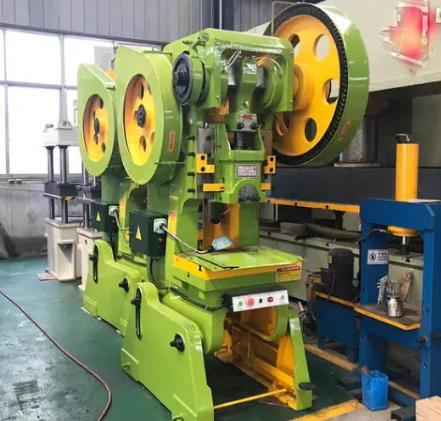
- Arrange machinery for linear product flow, with material input and finished goods output minimizing handling.
- Buffer tables and conveyors help prevent press downtime between operations.
- Combine punching with secondary operations (forming, tapping, QC) to reduce bottlenecks.
- Standardize part movement, ensuring every workstation is prepared for high-frequency tasks.
- Train operators on every aspect of machine setup, maintenance, troubleshooting, and safety.
- Regularly refresh knowledge as equipment and processes evolve.
- Track key performance indicators such as output per shift, tool longevity, and scrap rate to set benchmarks.
- Encourage operators to suggest improvements and reward efficiency.
- Retrofit presses with variable frequency drives to align motor speed with load requirements, reducing energy waste.
- Monitor power consumption and implement corrective actions for spikes or excess draw.
- Capture kinetic energy during deceleration phases and recycle within the plant.
- Install compensation equipment to reduce overall facility power demand.
- Equip machines with real-time dashboards for cycle times, punch count, and condition alerts.
- Monitor tool condition, punch pressure, and part dimensional accuracy continuously.
- Analyze machine performance trends for root cause analysis and proactive optimization.
- Integrate factory management systems to unify data, drive fast decisions, and track productivity improvements.
| Maintenance Task | Frequency | Description |
|---|---|---|
| Cleaning work area and machine | Daily | Remove debris, wipe surfaces, clean die area |
| Lubrication of moving parts | Daily to weekly | Apply recommended lubricants to guides, bearings |
| Inspect punch and die | Weekly | Check for wear, cracks, alignment |
| Check hydraulic fluid levels | Weekly | Top up fluid, inspect for leaks |
| Inspect electrical wiring & controls | Monthly | Check connections, clean components |
| Tighten loose fasteners | Monthly | Prevent misalignment and vibration damage |
| Replace worn parts | As needed | Replace damaged or worn components |
| Full mechanical inspection | Quarterly | Disassemble key parts for detailed inspection |
- Noise or Excessive Vibration: Check for loose fasteners, worn bearings, or misaligned punches/dies.
- Hydraulic Pressure Loss: Inspect fluid levels, hoses, seals, and replace fluids where necessary.
- Incomplete Punching: Verify tooling sharpness and RAM alignment; clean die area and remove debris.
- Electrical Faults: Test wiring, switches, relays, and sensors; replace damaged components promptly.
- Ensure all guards and safety devices are always installed and operational.
- Conduct regular safety audits; never bypass controls or operate unsafely.
- Keep the press area free of shavings, dust, and excess oil to minimize slip hazards and prevent contamination.
- Use brushes, compressed air, and vacuum—never hands—to remove debris from moving parts.
- Maintain thorough records of all inspections, repairs, and part replacements.
- Log downtime causes and corrective actions for predictive analytics and continuous improvement.
A factory running multiple presses improved efficiency by integrating automated parts feeding and real-time tool monitoring:
- Downtime dropped by 38%
- Output rose by 27%
- Tool life extended by 45%
- Energy costs per part fell by 12%
An advanced shop added in-die sensors and camera inspection to catch defects instantly. This led to:
- Faster troubleshooting
- Reduced reject rate
- Less manual sorting
- Higher overall throughput
Optimizing punch press machines for maximum output involves a holistic approach: precision setup, advanced tooling, strict maintenance, workflow efficiency, automation, and data-driven decisions. Training and safety, combined with predictive maintenance and real-time monitoring, create a resilient, high-output fabrication process. Manufacturers who apply these principles can transform their punch press operations, achieving sustainable gains in productivity, reliability, and profitability. Whether your facility uses basic mechanical presses or advanced servo-driven models, consistency and discipline are the foundation for world-class manufacturing.

Machine type, tooling quality, material selection, setup precision, and maintenance discipline are the central drivers of productivity. Automation and optimized workflow design have a major impact on throughput.
Tooling should be inspected and sharpened routinely based on production volume and materials processed. High-volume shops may require weekly or even daily attention for critical punch and die sets.
Yes. Even entry-level automation, like automated sheet feeders or programmable tool changers, greatly reduce idle time and operator intervention, making production smoother and more scalable for shops of any size.
The most frequent errors are incorrect die-punch clearance, misaligned tooling, and improper machine calibration. Each can cause premature tool wear, poor part accuracy, and increased risk of breakdown.
Machine monitoring systems track cycle rates, tool wear, and reject causes, enabling fast troubleshooting and highlighting inefficiency. This supports lean manufacturing while maximizing uptime and quality.


