
Views: 222 Author: Rebecca Publish Time: 2025-11-13 Origin: Site


Content Menu
● What Is a Punch Press Machine?
● The Working Principle of Punch Press Machines
● Types of Punch Press Machines
>> Servo and CNC Turret Punch Press
● Key Components and Design Features
● Applications and Industries That Rely on Punch Press Machines
>> Electronics and Electrical Manufacturing
>> Packaging and Container Industry
>> Aerospace and Medical Device Manufacturing
>> Hardware, Construction and General Fabrication
● Modern Capabilities and Technological Trends
● Advantages and Why They're Essential for Modern Manufacturing Lines
>> Efficiency and Productivity
>> Flexibility and Quick Changeover
>> Material and Design Versatility
● Detailed Example: Punch Press Operation in Electronics Manufacturing
● Setting Up a Punch Press: Best Practices
● Common Challenges and Solutions
● Environmental and Economic Impact
● Operator Skills and Training
● FAQ
>> 1. What materials can a punch press process?
>> 2. How does a punch press increase manufacturing efficiency?
>> 3. What industries benefit most from punch press machines?
>> 4. What are the main maintenance requirements for a punch press?
>> 5. What safety precautions should be observed when operating a punch press?
A punch press machine stands at the heart of modern manufacturing, enabling industries to transform raw materials into precise components and products at impressive speeds. Through the integration of force, advanced tooling, and programming, the punch press has become a foundational tool for high-volume, high-precision manufacturing environments. This article provides a comprehensive exploration of punch press machines, including their working principles, types, key components, applications, and their pivotal role in industry today.

A punch press is a powerful mechanical or hydraulic device designed to cut, form, or shape materials—mostly sheet metals—by pressing a punch tool through the workpiece and into a shaped die. By leveraging applied force in a controlled and repetitive manner, punch presses can create holes, shapes, flanges, or contours with exceptional accuracy. Modern punch presses range from manually controlled machines to fully automated CNC systems, each suited for varying volumes and complexity of fabrication.
At its core, the punch press operates much like a heavy-duty industrial version of a paper punch. Here's how it works:
- The sheet material is aligned on the work table, held steady by clamps or automation systems.
- The punch and die set is installed and aligned, matching the intended cut or shape.
- When activated, the ram exerts force, driving the punch down through the material and into the die, which shears or forms the material to the desired geometry.
- The cut-out scrap, known as a slug, is ejected, while the appointed punch pattern repeats across the sheet as programmed.
- For CNC models, a program directs precise tool paths, patterns, and sequencing.
The process achieves high productivity by automating these steps and allowing for near real-time adjustments and rapid changeovers.
Punch presses are generally categorized by their power source and automation level:
These presses use an electric motor to spin a flywheel, storing kinetic energy. A clutch transfers this energy to a crankshaft, translating rotating motion into the reciprocating linear force that drives the punch. Mechanical presses are valued for their speed and repeatability, making them ideal for mass production.
Using hydraulic cylinders, these presses apply controlled, high-force output with adjustable speeds—particularly suited for thicker, tougher materials and complex shapes. They provide smooth, quiet operation and can be fine-tuned for custom fabrication requirements.
Servo punch presses use servo motors for highly responsive, programmable operation, combining power with precise control. CNC turret punch presses feature rotating turrets with multiple punch tools, enabling rapid tool switching and the automated creation of intricate part geometries with minimal setup time.
- Frame: Provides the rigid structure that absorbs force and vibration during operation.
- Ram: Moves vertically to drive the punch tool.
- Punch and Die Set: Interchangeable toolsets that define the shape and precision of the operation.
- Drive System: Converts motor energy into ram motion.
- Control Interface: Varies from manual levers to advanced PLC touchscreens; CNC interfaces manage complex punch sequences automatically.
Technological advances have enabled punch presses to become safer, quieter, and far more efficient, with innovations like automatic tool changers, integrated deburring modules, and servo-driven rams.
Punch presses are essential in automobile manufacturing, especially for:
- Body panel fabrication, roof and door parts
- Chassis and structural components
- Brackets, supports, and custom mountings
They enable the high-volume, precise production of the many metal pieces needed in modern vehicles.
- Stamping terminals, connectors, and shields
- Forming accurate, burr-free holes in printed circuit boards (PCBs)
- Producing cases and covers for devices, ensuring electromagnetic compatibility
High precision is critical here, as even small imperfections can impact product performance.
- Producing cases, frames, mounting plates, and decorative trims for a wide range of consumer appliances
- Efficient manufacture of brackets, supports, and reinforced structures for furniture
- Creating metal components for machinery and automated systems
- Manufacturing durable or custom-formed parts used in reusable or recyclable packaging
- Fabricating lightweight but high-strength parts under tight tolerances
- Ensuring repeatability and reliability for both safety and regulatory compliance
- Producing door hardware, locks, hinges, and reinforcement brackets
- Forming structural joinery plates and custom sheet metal fittings
Punch presses support custom and mass-produced components alike, reflecting their broad applicability.
With advancements in CNC and servo-driven technologies, punch press machines now offer:
- Automated sheet loading, repositioning, and unloading
- Real-time monitoring and adaptive controls for improved quality assurance
- Combination systems integrating punch presses with laser cutters for even greater flexibility
- Reduced tool change times via turret or automatic changing stations
- Data tracking for traceability, maintenance planning, and optimized production scheduling
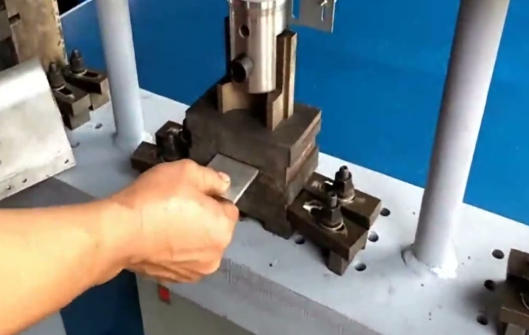
Automated punch presses can perform thousands of punches per hour with extremely consistent results, dramatically boosting throughput and reliability. Operators can supervise multiple machines, further amplifying productivity.
By using carefully engineered dies and real-time feedback systems, punch presses maintain tight tolerances and repeatability, ensuring parts fit and function precisely as required.
A single punch press can handle numerous part geometries and change jobs rapidly, supporting lean manufacturing and customization trends. CNC programs can be modified to accommodate design changes within minutes.
Streamlined labor, reduced material waste, and the minimization of manual errors translate to lower overall manufacturing costs, especially at scale.
From thin aluminum to thick steel, and even certain plastics, punch presses can be tailored for almost any sheet material and part requirement.
Consider the production of printed circuit boards (PCBs) and shielding cases:
- A CNC punch press is programmed to punch precise rows of holes with exact spacing.
- The tooling is selected and installed, ensuring burr-free cuts that avoid damaging board traces.
- Automated sheet positioning guarantees each cut is made within microns of the design placement.
- If an issue arises—such as burrs or misalignment—machine operators recalibrate dies or replace worn tooling, keeping defect rates low.
This level of accuracy is mandatory for electronic devices, where even minor defects can cause short circuits or product failures.
- Ensure the workspace and machine are clean, well-lit, and free of unnecessary items that could interfere with material handling.
- Carefully install and align the dies. Improper alignment can damage costly tools or scrap entire sheets.
- Monitor regular maintenance schedules, checking lubrication, fastener tightness, and system calibration.
- Use safety guards, interlocks, and follow proper lock-out/tag-out procedures to prevent accidental starts or injuries.
- Material burrs: Ensure tooling is sharp and properly aligned; adjust clearances as needed.
- Noise or vibration: Inspect fasteners and apply correct lubrication; replace worn components.
- Quick changeovers: Automate tool changing and standardize die sets for common operations.
Modern punch presses are designed for environmental and economic efficiency:
- Energy-efficient motors and hydraulic systems
- Reduced noise and improved air quality inside manufacturing plants
- Optimized material usage through software-controlled nesting, minimizing scrap
Sustainability is further supported by the manufacture of components for renewable energy products, efficient appliances, and recyclable packaging materials.
As punch press technology advances, operators need a blend of hands-on skills and digital literacy, including:
- Understanding safety standards and maintenance routines
- Reading and interpreting technical drawings and digital files (CAD/CAM)
- Programming CNC systems and troubleshooting process issues
- Maintaining records for traceability and quality control
Ongoing training ensures operators can fully leverage the latest machine capabilities—boosting productivity, minimizing downtime, and reducing scrap.
Emerging trends in punch press machinery include:
- Integration with Industry 4.0, supporting smart factory initiatives and machine-to-machine communications
- Greater use of artificial intelligence for predictive maintenance and process optimization
- Expansion of modular tooling and quick changeover systems
- Development of hybrid punch/laser machines for maximum versatility
These trends promise to make punch press operations safer, more productive, and more adaptable to global market shifts.
A punch press machine is more than just a tool; it is a strategic asset in any modern manufacturing line. With its ability to deliver precision, speed, and adaptability across numerous industries, it empowers manufacturers to meet strict quality standards, reduce costs, and respond rapidly to changing customer needs. Whether producing millions of automotive brackets, custom packaging components, or high-tech electronics, punch presses provide the backbone for industrial competitiveness in today's market. The combination of evolving technology, operator expertise, and sound safety practices ensures that the punch press will remain indispensable well into the future.
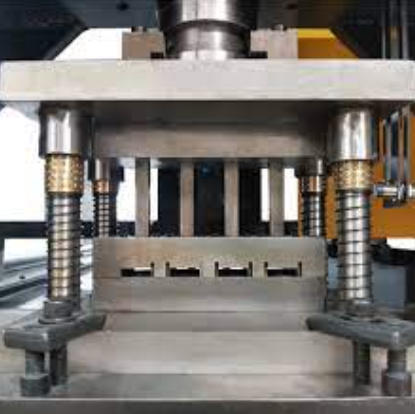
A punch press can work with a variety of materials including carbon steel, stainless steel, aluminum, copper, brass, and some plastics. The proper selection of tooling and machine settings is important to ensure the best results for each material type.
Punch presses boost efficiency by automating repetitive cutting and forming operations, supporting rapid tool changes, and enabling operators to oversee multiple machines. Their reliability and speed minimize labor costs and reduce scrap.
Automotive, electronics, furniture, packaging, aerospace, appliance manufacturing, and general hardware fabrication are among the main industries that benefit from punch press machines thanks to their versatility, speed, and repeatability.
Regular maintenance includes checking lubrication and hydraulic fluids, inspecting tooling for sharpness and wear, ensuring all safety devices are functional, and calibrating the control system. Preventative maintenance helps avoid breakdowns and extends the machine's lifespan.
Operators should wear appropriate personal protective equipment, use guards and interlocks, and follow locking/tagging procedures during maintenance. Training on hazards, machine functions, and emergency stops is crucial for workplace safety.


