
Views: 222 Author: Rebecca Publish Time: 2025-11-16 Origin: Site


Content Menu
● Introduction to the two technologies
● Strategic differences at a glance
● Performance considerations in production environments
>> 1) Material and part geometry
>> 2) Tolerances and dimensional stability
>> 4) Tooling life-cycle costs
>> 5) Maintenance and reliability
● Choosing the right machine for your use case
● Quality and process control considerations
● Safety and regulatory considerations
● Maintenance and upgrade paths
● Expanded case studies and practical considerations (new sections)
● Technology trends shaping choice
● Sustainability and environmental impact
● Operational readiness and training
● FAQ
>> 1. What is the main difference between a punch press and a die-cutting machine?
>> 2. Which machine is better for high-volume metal stamping?
>> 3. Can die-cutting machines handle metal materials?
>> 4. How do I decide on automation features?
>> 5. What maintenance practices extend machine life?
Choosing the right machinery is a pivotal decision for any manufacturing operation that works with sheet metal, foil, labels, or flexible materials. Two of the most common options on shop floors are punch press machines and die-cutting machines. Each has its own strengths, weaknesses, cost profile, and ideal use cases. This article compares Punch Press Machines and Die-Cutting Machines in depth, covering fundamentals, applications, performance metrics, cost considerations, maintenance, and decision criteria to help you select the equipment that best fits your production goals.

- Function: A punch press is a device that uses a punching tool (punch) and a matching die to shear, form, or notch material, creating precise cutouts or shapes. The process relies on a mechanical or hydraulic press that applies a high downward force to deform the workpiece.
- Typical materials: Sheet metal (steel, aluminum), foil, thin plastics, and other ductile substrates.
- Common configurations: Mechanical punch presses, hydraulic punch presses, turret punch presses, and servo-electric punch systems.
- Typical outputs: High-volume stamping of brackets, clips, fasteners, and intricate cutouts with tight tolerances.
- Function: Die-cutting uses a shaped blade or die (rotary, flatbed, or knife) to cut, perforate, or crease materials. In many cases, the die is custom-made to produce complex outlines or patterns rapidly, often in continuous runs.
- Typical materials: Paper, cardboard, corrugated board, textiles, adhesives, films, laminates, and label stock.
- Common configurations: Rotary die-cutters, flatbed die-cutters, automatic die-cutters, and kiss-cut/rotary systems for self-adhesive materials.
- Typical outputs: High-speed production of labels, packaging blanks, packaging inserts, and perforated or scored patterns for easy folding.
- Precision and repeatability: Punch presses excel at repeatable, high-volume operations with tight tolerances on metallic parts. Die-cutters excel at complex shapes, multi-quad patterns, and soft materials where scoring, perforation, or kiss-cutting is required.
- Material compatibility: Punch presses are favored for tougher, ductile metals and thick sheets. Die-cutters shine with flexible materials such as papers, films, labels, and foams.
- Tooling lifecycle and costs: Punch tooling (dies, punches, turret tooling) can be durable but requires precise maintenance and occasional re-sharpening. Die-cutting dies can be more specialized and may wear with abrasive materials, but rotary die-cutters tend to offer quick setup for high-speed production.
- Throughput and cycle time: High-speed turret punch presses can achieve very fast cycle times for metal parts; die-cutters can achieve excellent speeds for large-volume label, packaging, and flexible material runs, especially with continuous-feed configurations.
- Changeover and setup: Die-cutting lines for labels and packaging often feature quick-change dies and automated laydown systems. Punch presses may require more downtime to swap tooling or reprogram turret indices, though modern CNC and servo-driven systems mitigate this.
- Complex shapes with fine features: Die-cutting, especially rotary or laser-assisted processes, can produce intricate patterns efficiently.
- Thick or rigid metals: A punch press, particularly hydraulic or servo-controlled, is typically better suited for thicker sheets and demanding forming operations.
- Perforations, scoring, and embossing: Die-cutting systems with scoring blades or creasing rules are often the better option for packaging and flexible materials.
- Punch presses deliver strong positional accuracy for metal parts when matched with high-quality dies and precise alignment.
- Die-cutting tolerances depend on material behavior and blade sharpness; properly maintained dies yield consistent cut quality across long runs.
- High-volume metal stamping lines can outperform most die-cutting setups in terms of throughput, especially when automation like feeder systems and robotic pick-and-place is integrated.
- Flexible packaging, labels, and adhesive film runs can leverage automated die-cutting lines for rapid changeovers and reduced downtime between SKUs.
- Punch tooling: Threaded dies, bushings, and punch receivers require periodic maintenance. Tool wear leads to replacement costs and potential downtime.
- Die-cutting dies: For rotary dies, blade wear and the need for blade height adjustments influence long-term costs. Proper blade materials and maintenance schedules extend tool life.
- Punch presses demand hydraulic or mechanical maintenance: oil quality, filter changes, lubrication, and inspection of rivets, guides, and bearings.
- Die-cutters require blade maintenance, die alignment checks, and calibration of feed systems to prevent misregistration and material waste.

- Capital expenditure: Punch presses range from entry-level mechanical units to high-end servo-electric or hydraulic systems with automated feeder integration. Die-cutters range from simple flatbed configurations to sophisticated rotary or semi-rotary lines with automated material handling.
- Operating costs: Material utilization efficiency, tool wear, and energy consumption influence ongoing costs. Die-cutters often benefit from lower per-unit costs in packaging and label sectors due to high-speed cycles and automation.
- Maintenance costs: Regular maintenance contracts, spare parts, and on-site service agreements can reduce unexpected downtime and extend machine life.
- Total cost of ownership (TCO): When evaluating TCO, consider upfront price, expected production volume, annualized maintenance, energy consumption, tooling lifecycle, and depreciation benefits.
Ask these key questions to guide your decision:
- What material will be processed most often? If primarily metals, a punch press could be more appropriate; if primarily paper, film, or labels, a die-cutting machine often fits best.
- What is the required tolerance and feature complexity? For ultra-tight tolerances and simple rectangular cuts on metal, punch presses may be preferable; for complex contours and perforations on flexible substrates, die-cutters excel.
- What are the production volumes and SKUs? High-volume stamping favors punch presses; high mix with frequent changeovers favors die-cutting lines with quick tooling changes.
- Is automation a priority? Punch presses with automatic feeders, magazines, and robotic handling can match high-speed die-cutting lines in some environments.
- What is the available shop footprint and integration needs? Consider floor space, ventilation, and compatibility with existing ERP/MMS workflows and automation.
- Automotive and aerospace metal parts: Punch presses dominate due to speed, accuracy, and robust tooling for mass production of brackets, clips, and fasteners.
- Electronics packaging and shields: Die-cutting machines are often used for flexible laminates, screens, and shielding materials that require precise contours and perforations.
- Packaging and labeling: Die-cutting lines are standard for producing labels, packaging inserts, carton blanks, and specialty films with perforations or kiss-cuts.
- Consumer products: A mix of punch pressing for metal components and die-cutting for paper, card, and film products is common in multi-process facilities.
- Tooling calibration: Regular inspection and calibration of punches, dies, blades, and creasing rules ensure consistent quality and dimensional accuracy.
- Registration and alignment: For both processes, precise registration is critical to avoid misalignment across multi-layer substrates and multiple operations.
- Material handling: Uniform material tension, feed accuracy, and anti-wow features reduce scrap and improve throughput.
- Surface finish and burr control: Punching can produce small burrs on metal edges; die-cutting can leave rough edges on certain materials. Post-processing steps or tooling refinements mitigate these issues.
- Equipment guarding: Both punch presses and die-cutters require proper guarding, interlocking safety devices, and operator training to prevent injuries.
- Emergency stops and lockout-tagout: Ensure machines support safe maintenance practices and compliance with local safety regulations.
- Material safety: Some substrates produce fine dust or particulates; appropriate ventilation and PPE should be provided where needed.
- Regular preventive maintenance: Establish a maintenance calendar for lubrication, spindle checks, and blade/die sharpness assessments.
- Condition monitoring: Use sensors and periodic inspection data to predict tool wear and schedule timely replacements before failures occur.
- Upgrades: Consider servo-driven feeds, automated tool changers, and high-precision alignment systems to improve productivity and reduce downtime over time.
- Case study A: A mid-sized packaging converter transitioning from rotary die-cutting to a hybrid line that combines die-cutting with selective punching for metalized films. The shift allowed greater SKU flexibility, reduced changeover times, and improved waste management through optimized web tension controls.
- Case study B: An automotive supplier optimizing a metal stamping line by incorporating a servo-driven press with automated tool changers and a parts feeder. The upgrade reduced downtime by 22% and improved dimensional consistency across shifts.
- Practical tip: For facilities with space constraints, consider a modular, expandable die-cutting line that can be upgraded with rotary modules later, rather than committing to a high-capital, single-purpose setup upfront.
- Servo-electrification: Both punch presses and die-cutters are increasingly moving toward servo-electric solutions that offer precise control, energy efficiency, and easier maintenance compared with hydraulic systems.
- Hybrid systems: Some manufacturers are integrating complementary processes on a single production line, enabling a mixed output of metal parts and flexible packaging components with shared handling and vision systems.
- Digital tooling and smart maintenance: Predictive maintenance and digital twin simulations help forecast tool wear and optimize setup parameters before production starts, reducing scrap and downtime.
- Material efficiency: Die-cutting lines often generate less scrap on flexible substrates with optimized nesting and taut web feeding, while punch presses can achieve high material utilization with well-designed tooling.
- Energy consumption: Servo-driven systems reduce energy use relative to traditional mechanical or hydraulic presses, particularly during idle periods and non-cutting cycles.
- Waste management: Debris and cut waste from metal stamping require proper collection and recycling streams, while scrap from die-cutting lines can be more segregated and recyclable depending on substrate.
- Operator skills: Punch presses require familiarity with die setup, tonnage adjustments, and safety protocols. Die-cutters demand proficiency in blade changes, die alignment, and web tension control.
- Maintenance staff: Technicians should be trained in both mechanical and hydraulic systems for punch presses, as well as blade maintenance and calibration for die-cutters.
- Safety culture: Regular drills, lockout/tagout procedures, and visible safety signs reduce the risk of injury in busy production environments.
The choice between a punch press machine and a die-cutting machine hinges on your product mix, material types, required tolerances, and production scale. Punch presses excel in fast, repeatable metal stamping with robust tooling for rigid materials, while die-cutters shine in producing complex shapes from flexible substrates with rapid changeovers. A thoughtful evaluation of material behavior, production goals, and total cost of ownership will guide you toward the most cost-effective and efficient solution for your operation. In many modern facilities, a hybrid approach—combining strengths of both technologies—offers the greatest flexibility, allowing metal parts to be produced at high speed while configurable die-cutting sections handle packaging, labels, and decorative laminates. The right balance depends on careful analysis of current demand, projected SKU proliferation, and planned capacity expansion.
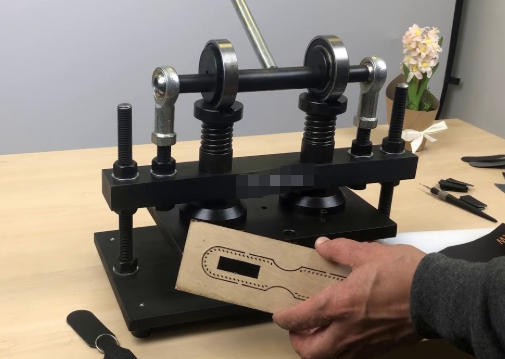
Punch presses form or cut metal using punches and dies with high force, ideal for metal sheets; die-cutters use shaped blades to cut or perforate flexible materials like paper, film, and labels.
Punch presses are generally better for high-volume metal stamping due to speed, rigidity, and tooling robustness.
Most die-cutting machines are optimized for non-metal substrates. Some die-cutting setups can handle thin foil or laminated metal materials, but metals typically require punch presses or specialized dies.
If production involves long runs with minimal changeovers, invest in automated feeders, tool changers, and robotic handling. For high mix with frequent changes, prioritize quick-change dies and modular tooling.
Regular lubrication, die/punch sharpening when needed, blade height checks, alignment verification, and preventive maintenance contracts help minimize downtime and extend tool life.


