
Views: 222 Author: Rebecca Publish Time: 2025-11-13 Origin: Site


Content Menu
● The Role of Punch Press Machines in Kitchenware Production
● Types of Punch Press Machines for Kitchenware Manufacturing
● Core Technical Features of Modern Punch Press Machines
● Technical Specifications of Punch Press Machines
● Leading Punch Press Machine Brands in Kitchenware Manufacturing
>> Accurl
>> Chin Fong
>> PRIMA POWER
● Punch Press Workflow in Kitchenware Factories
● Applications: Kitchenware Products Benefitting from Punch Press Machines
● Advanced Automation and Digital Integration
● Production Speed, Efficiency, and Factory Economics
● Case Study: Implementation of a High-Speed 100 Ton Punch Press
● Sustainability and Environmental Impact
● Strategic Selection: Choosing the Right Punch Press Machine
● FAQ
>> 1. What materials can punch press machines process for kitchenware?
>> 2. How do punch presses support mass production in kitchenware factories?
>> 3. Which type of punch press is best for deep forming kitchenware parts?
>> 4. What are the keys to maintaining a punch press machine for reliability?
>> 5. Can punch presses handle both large-scale and customized kitchenware orders?
Amid rising demand for premium kitchen products, manufacturers are continuously seeking ways to improve efficiency, precision, and scalability. Punch press machines have become indispensable assets for producing diverse kitchenware products—from cutlery and cookware to specialty utensils and accessories. This comprehensive guide explores the principles, types, technical features, industry leaders, and strategic advantages of the best punch press machines for kitchenware production.

Punch press machines empower kitchenware factories to process large volumes of sheet metal rapidly, accurately, and with minimal labor. Their ability to cut, shape, and form metal materials allows for the streamlined fabrication of components including pot bodies, lids, trays, and decorative accents.
- High-Speed Operations: Modern punch presses routinely achieve between 100 and 1,700 strokes per minute, which drastically increases output compared to manual or semi-automatic processes.
- Versatile Material Handling: From stainless steel and aluminum to cold-rolled steel and specialty alloys, punch presses handle a range of materials critical for durable, food-grade products.
- Consistent Quality: Advanced presses offer consistent pressure and repeatable accuracy, minimizing defects and off-spec products.
Mechanical presses rely on motors, flywheels, gears, and cranks to deliver force. They are excellent for high-volume blanking, shallow forming, and rapid cycles.
- Frame Types: Common configurations include C-frame (door frame) and gantry or straight column (H-type). The C-frame supports up to 300T of nominal pressure, suitable for standard kitchenware, while the H-type handles higher pressures and is ideal for thicker components.
- Speed and Precision: Mechanical presses can reach speeds of up to 1,700 SPM and stroke accuracy of ±0.05–±0.1 mm, providing reliability for uniform production runs.
Hydraulic presses offer adjustable tonnage and smooth, controlled pressure. They excel at deep-drawing operations and shaping thicker metals.
- Application: Used for items requiring deeper forming, such as pot bodies or multiple-layer trays.
- Features: Variable pressure, stable force, and robust construction allow for flexibility and accurate production for a range of kitchenware.
CNC turret presses stand out for their programmable automation, accommodating frequent tooling changes and complex patterns within a single setup.
- Benefits: High precision, repeatable results, reduced manual intervention, and fast adaptation to custom orders.
- Tooling: Turrets may accommodate 16 to 24 tools, supporting diverse design requirements.
Servo-electric presses rely on direct-drive motors for cleaner, quieter, and energy-efficient operations.
- Efficiency: Up to 50% reduction in energy consumption and maintenance compared to traditional hydraulic models.
- Speed: Capable of speeds up to 1,500 strokes per minute, they cater to mass production demands.
An efficient punch press machine incorporates the following components and features:
- Frame & Worktable: Sturdy steel construction and a balanced structure support consistent, vibration-free performance.
- Drive & Control: Advanced control panels and safety features regulate movement and force, ensuring precision and operator safety.
- Punch & Die System: Interchangeable die sets offer flexibility for various product shapes, sizes, and branding needs.
- Brakes & Safety Controls: Quick-stop functions prevent accidents, maintaining high safety standards.
- Tool Monitoring: Sensors monitor tool wear and machine performance to prevent downtime and ensure consistent quality.
- Automatic Feeding: Robotic loaders and part stackers integrate seamlessly, facilitating uninterrupted, automated production lines.
When selecting a punch press for kitchenware production, key specifications include:
| Press Type | Max Pressure (Tons) | Stroke Accuracy (mm) | Max Speed (SPM) | Applicable Material Thickness (mm) |
|---|---|---|---|---|
| Mechanical | 10–1,500 | ±0.05–±0.1 | 100–1,700 | 0.1–12.0 |
| Hydraulic | 10–2,000 | ±0.05–±0.2 | 50–1,200 | 0.5–16.0 |
| CNC Turret | 30–300 | ±0.01–±0.05 | 80–300 | 0.5–6.0 |
| Servo-Electric | 10–500 | ±0.01–±0.03 | 200–1,500 | 0.1–4.0 |
Youngmax specializes in heavy-duty hydraulic punch presses, particularly four-column models designed for multi-hole and deep-draw operations. Their presses deliver the strength needed for items like pot bodies and lids.
Known for CNC turret presses, HaoHan delivers speed and intricate accuracy, allowing manufacturers to tackle both mass-production and custom OEM kitchenware projects with minimal downtime.
Accurl offers servo-driven, high-speed presses equipped with advanced REXROTH AC drive technology. Their machines feature user-friendly CNC controls and are well-suited to scalable production environments seeking energy efficiency.
As Asia's largest forging machinery supplier, Chin Fong is recognized worldwide for robust and reliable punch presses, trusted by top kitchen appliance manufacturers.
PRIMA POWER's servo-electric CNC punch presses are acclaimed for energy-efficient, precise, and ergonomic production, serving manufacturers focused on long-run stability and quality.
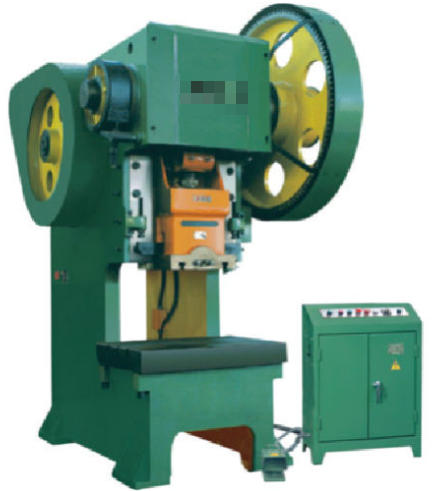
Modern factories utilize a stepwise workflow to ensure efficient and quality-oriented production:
1. Sheet Metal Feeding: Automated systems load metal coils or sheets onto the worktable, minimizing manual handling.
2. Punching & Forming: The press applies force for blanking, piercing, and forming as per programmed patterns.
3. Finishing: Robotic in-line deburring, polishing, and edge finishing eliminate manual post-processing.
4. Quality Inspection: Integrated sensors and vision systems check dimensions and defects in real-time.
5. Packing: Automated sorters and stackers organize finished parts for packaging and shipment.
Punch presses are fundamental in producing:
- Cutlery: Spoons, forks, and knives, manufactured rapidly and to precise specifications.
- Cookware Bodies: Pots, pans, lids, and trays, shaped and cut with minimal waste.
- Decorative Componentry: Embossed patterns and branded logos for premium kitchen products.
- Accessories: Food-safe containers, specialty cooking tools, and custom-designed utensils.
The latest punch press machines feature integration with smart manufacturing platforms:
- Industry 4.0 Connectivity: Machines link to factory management software, enabling real-time performance tracking and predictive maintenance.
- Remote Monitoring: Supervisors can review production output and equipment health from anywhere, reducing unplanned downtime.
- Flexible Production Scheduling: Quick tooling changeovers support dynamic scheduling for varying order sizes, supporting both bulk production and high-mix, low-volume batches.
- Cycle Optimization: Advanced programming and optimized ram movements squeeze the most cycles into every production minute.
- Energy Savings: Servo-electric and efficient hydraulic models reduce factory utility costs and contribute to sustainability goals.
- Labor Reduction: Automation reduces the need for direct labor, freeing skilled operators to focus on value-added activities.
To maintain peak output and reduce risk:
- Routine Lubrication: Bearings, gears, and slides must be regularly greased.
- Calibration: Tonnage, stroke length, and tool alignment should be periodically reviewed.
- Preventive Inspections: Scheduled checks for wear, metal fatigue, and control system integrity.
- Operator Training: Teams must receive updated training on both machine safety and automation protocols.
A prominent kitchenware producer adopted a 100-ton hydraulic punch press for heavy-duty stainless steel pot bodies. The machine enabled:
- Tighter tolerances and reduced scrap rates
- Faster changeovers between product variants
- Full integration with robotic loading and post-processing, boosting output by 35% within a year
Modern punch presses contribute to sustainable manufacturing through:
- Reduced Material Waste: Precision punching minimizes trim and reject rates.
- Lower Energy Use: Servo motors and regenerative braking systems cut consumption.
- Cleaner Operations: Enclosed systems and eco-friendly lubricants reduce pollution and support regulatory compliance.
Choosing the optimal punch press involves balancing production needs, material compatibility, flexibility, automation capabilities, and investment budget.
- For high-volume standardized products, mechanical or hydraulic presses offer cost-effective speed.
- For custom or small-batch runs, CNC turret and servo-electric models provide versatility and fast tool adjustments.
- Manufacturers aiming to future-proof their operations invest in automation-ready, Industry 4.0-compatible punch presses.
The adoption of advanced punch press machines is transforming kitchenware manufacturing by merging speed, precision, efficiency, and flexibility. Whether investing in mechanical, hydraulic, CNC, or servo-driven technologies, brands can scale output, meet rigorous quality standards, and adapt swiftly to market demands. Automation, material versatility, and sustainability considerations are driving the industry forward, guaranteeing that the next generation of kitchen products will be manufactured faster, smarter, and cleaner. For any kitchenware manufacturer aiming to lead in a global, competitive market, choosing the right punch press machine—and maintaining it to the highest standards—is essential to achieving production goals and building a reputation for quality.
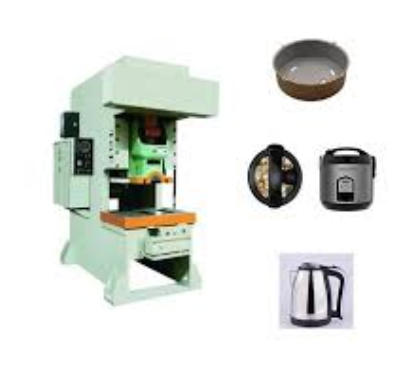
Punch press machines can process stainless steel, aluminum, cold-rolled steel, and various food-grade alloys. This versatility ensures compliance with global standards for health, durability, and corrosion resistance.
Punch presses operate at high speeds and enable automated workflows, from sheet feeding to final punching and quality inspection. This process reduces manual labor and enables factories to efficiently produce thousands of identical units.
Hydraulic punch press machines are preferred for deep forming and working with thicker materials, whereas mechanical and CNC turret presses are better suited for blanking and forming thinner sheets.
Routine lubrication, calibration, and preventive inspections keep machines running smoothly. Up-to-date operator training and regular tool monitoring are also essential for consistent performance.
Yes, modern CNC and servo-electric machines offer quick tool changeovers and programmable operations. This enables manufacturers to switch between mass production and custom orders efficiently, serving both bulk and specialized markets.


